Loader Crane – The Courage to Keep Reinventing Itself
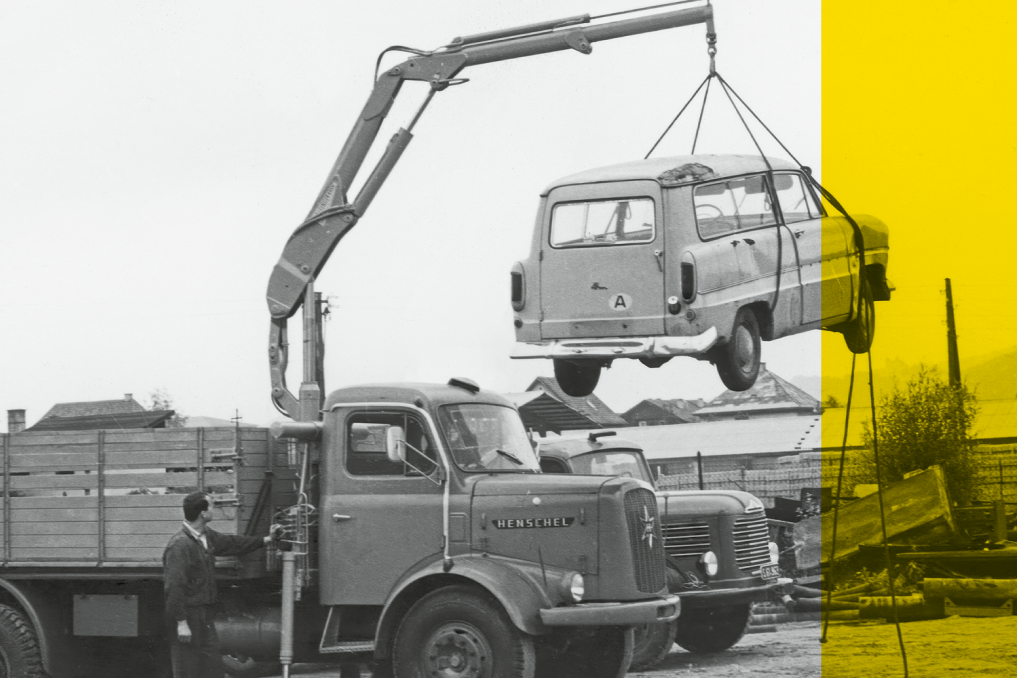
Innovations have shaped PALFINGER's success from the very beginning.
With determination and foresight, the company continues to set new benchmarks in the transformation of the loader crane – from pioneering hydraulic achievements to today's digital and electric systems.
Facts & Figures
Fact 1
More than 200,000 loader cranes were manufactured by December 31, 2024
Fact 2
Around 3,500 differenct parts make up a PK 880 TEC loader crane.
Fact 3
It takes 12,000 hours to develop a large loader crane like the PK 880 TEC from engineering drawing to production.
Fact 4
There are now more than 100 different models of loader crane available.
Fact 5
The oldest loader crane is 61 years old.
"Our goal is to provide integrated, comprehensive solutions that overcome tomorrow's challenges in a connected and smart way."
Michael Völker
Head of Product Management Loader Cranes EMEA at PALFINGER

Innovative features
These innovations have continuously enhanced efficiency, safety, and ease of use of the loader crane.
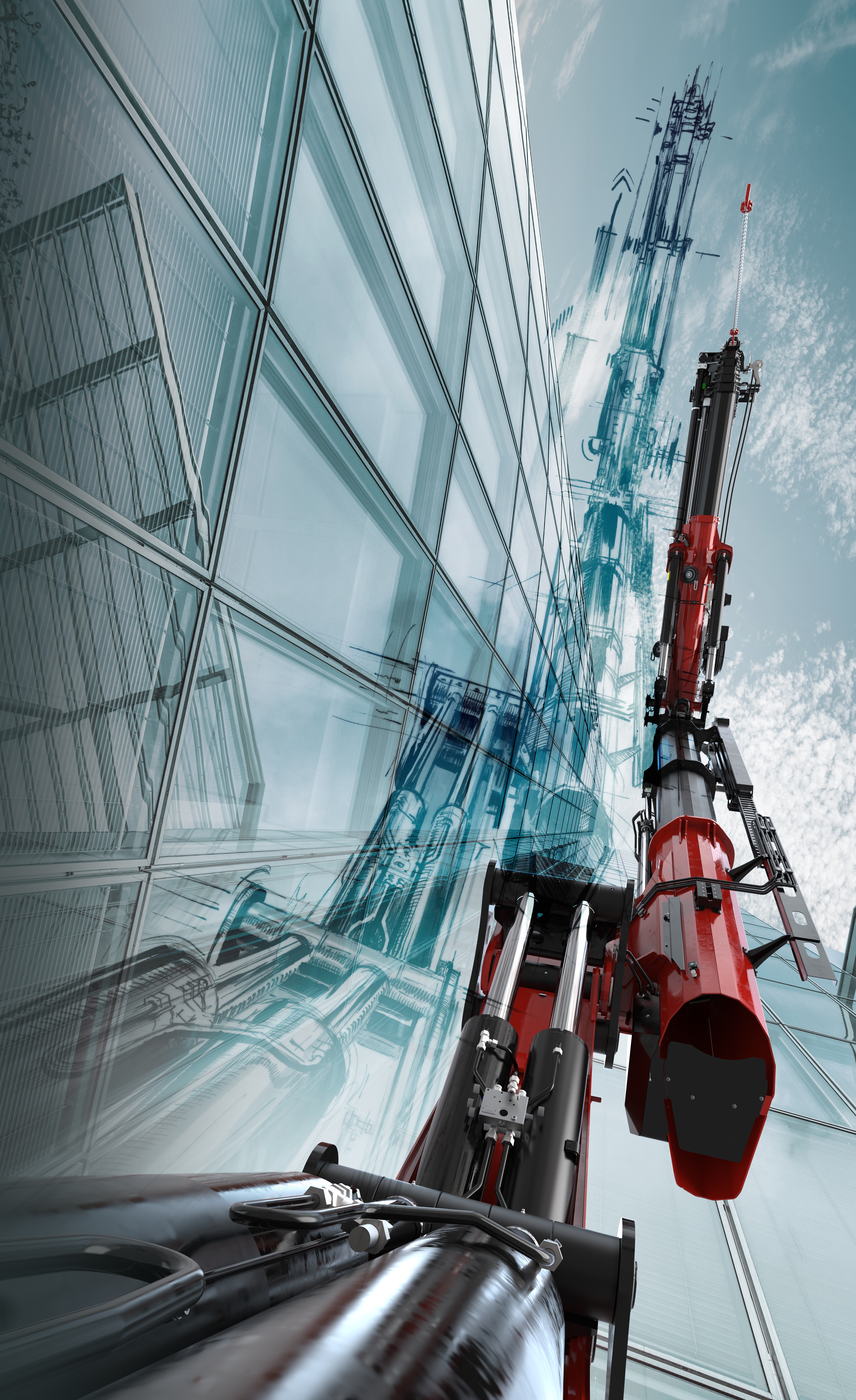
Reaching High: The Evolution Of The Loader Crane
Hydraulics as standard
Redefining something new: In 1959 Richard Palfinger presents his first loader crane with a stiff boom system. In 1964 Hubert Palfinger brings the first hydraulic loader crane onto the market with a significantly extended outreach. In 1968 PALFINGER starts small series production with the first exports to France and Switzerland.

Multifunctional workhorse
Progress at all levels: In 1971 a patent for hydraulic lifting moment regulation sets new standards in precision and performance, heralding a decade of technical progress. Numerous patents, from hydraulic lifting moment regulation to the mast planting grab and folding main boom, make the PALFINGER loader crane a multifunctional workhorse.

Double success
Who dares wins: With the Power-Link system, PALFINGER introduces a double lever arm system — both on the main boom and on the knuckle boom. A highly daring step because it is more expensive and complex than a crane without double lever arms because you need additional joints, journals and bearings. In the 1980s, the Power-Link system is a unique selling point. Today, the double lever arm system is standard on loader cranes all over the world.

Electronics on the rise
Electronics become a game changer: The introduction of PALTRONIC 100 in 1992 sees it replace previous overload systems and enable precise overload protection and precision crane control for the first time. Launched in 1998, Active Oscillation Suppression (AOS) dampens the natural vibrations of the loader crane and significantly improves precise control. The system immediately defines a new benchmark. Initially viewed with skepticism, electronics turn out to be a real game changer.

Green thinking has priority
It's the details that matter: PALFINGER uses new materials and coatings to increase the service life of the cranes. Cathodic dip painting (CDP), introduced in 2002, not only protects cranes from corrosion, but also keeps them looking good — a decisive factor when it comes to the high resale value of PALFINGER cranes. Following the development of PALTRONIC 50 and PALTRONIC 150, electronic control systems make operation easier, safer and more efficient.

The triumph of electronics continues
Sharpening profile: In 2011 PALFINGER increases safety during operation with the innovative HPSC (High Performance Stability Control) system. And at the same time ensures that operators can work much more comfortably than before. In 2012 PALFINGER introduces the P-Profile. The lightweight and particularly stiff boom system enables longer outreaches with significant weight reduction and energy savings as a result.

Connected thinking
Smartly connected as standard: Digitalization gains momentum. The “CONNECTED” IoT platform connects the FLEET MONITOR, OPERATOR MONITOR and Service Cockpit apps. This provides the technological basis for achieving greater efficiency, better predictability and more profitable operation with real-time data. Using SMART CONTROL, operators control the crane tip in all directions and can save crane positions using the memory position function. Since 2025, PALFINGER has even delivered a wide range of its equipment from the factory with a telematics module and the option to transfer data as standard — CONNECTED as a standard. This allows customers to take advantage of digital services directly.
